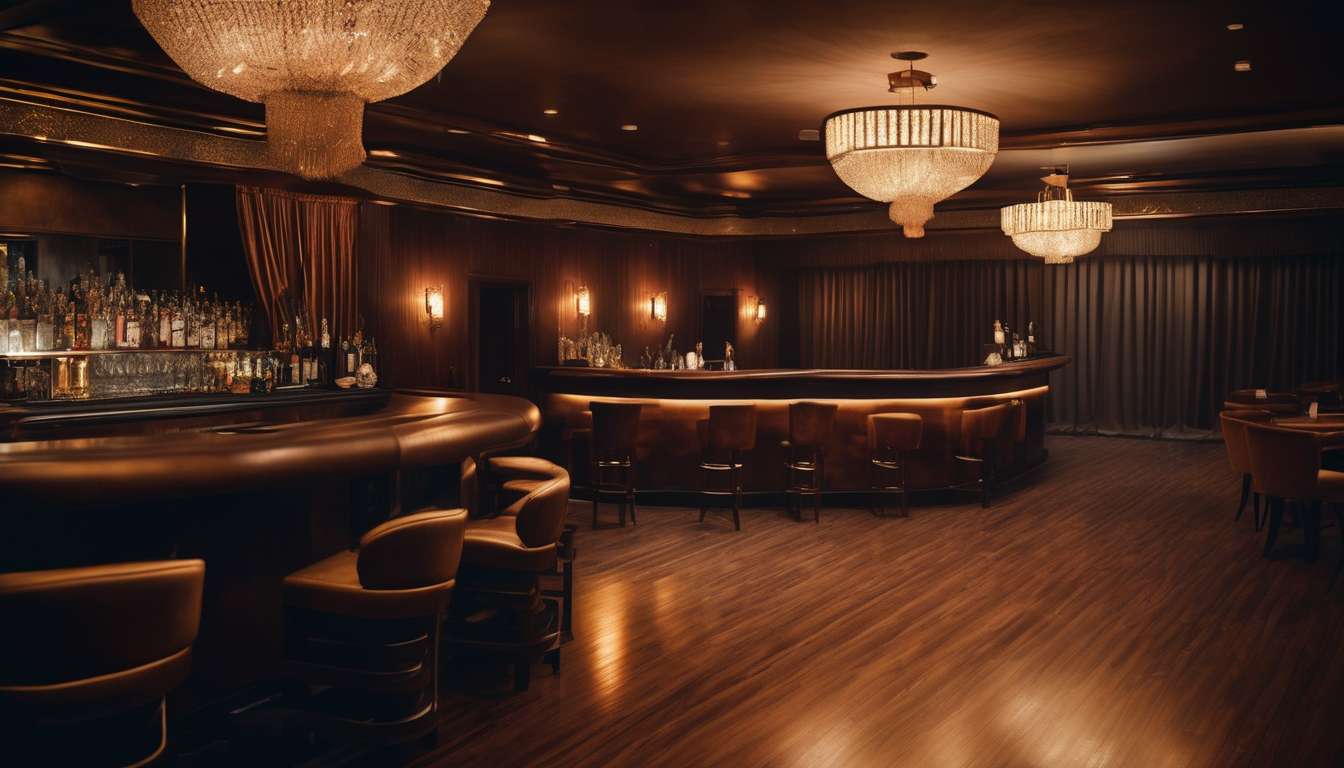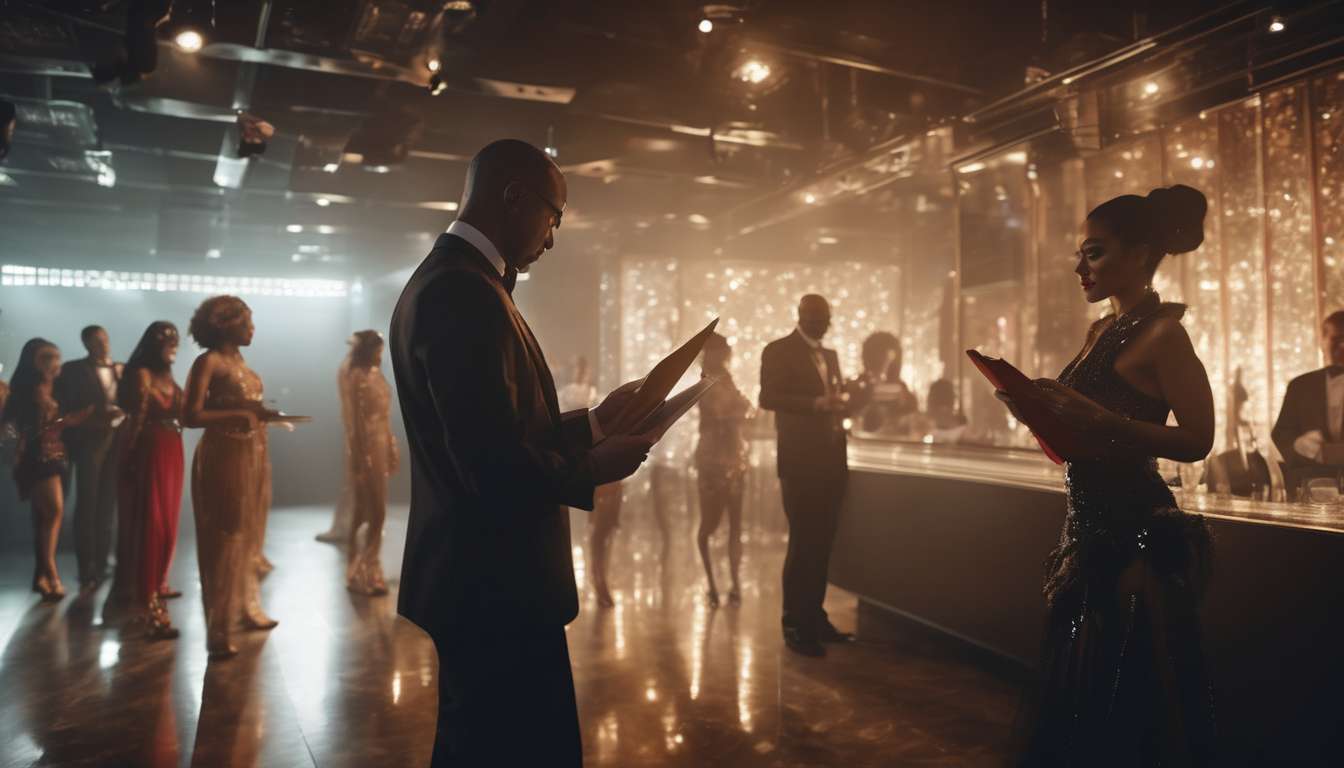

Under the neon canopy, "we are all translators of movement."
This guiding idea frames our inquiry into exotic dancing and nightlife: we approach clubs not as lurid curiosities but as layered texts in which bodies, music, and architecture converse about desire, labor, and belonging.
Our methods combine multiple approaches:
- Participant observation.
- Interviews with performers and patrons.
- Archival research.
We pay attention to several intersecting domains:
- Vernacular choreography and embodied meaning.
- Economic rhythms that shape schedules and tipping cultures.
- Informal rules governing consent and commodification.
By centering multiple perspectives, we map key tensions: performers’ voices alongside managerial perspectives and municipal regulations reveal conflicts between autonomy and precariousness, and between spectacle and privacy.
Our aim is to complicate simplistic moral tales: we reveal nightlife as a vital urban ecosystem that reflects broader social anxieties and demonstrates creative resilience.
This study invites readers to read the club as a cultural archive: nightlife continually writes and rewrites social order.
Translating Movement into Meaning
We analyze how dancers’ gestures, pacing, and spatial choices communicate emotion, intent, and social signals within nightlife settings.
Movement is treated as a shared language that invites recognition and connection.
- A lowered gaze, a measured turn, a brief touch — each gesture carries meaning that regulars and newcomers learn to read.
- These micro‑gestures create expectations and momentary exchanges that structure interaction on the floor.
Using ethnography, we trace how performers negotiate stage and floor, converting bodily skill into relational work that supports mutual belonging.
- Performers manage visibility, proximity, and timing to build rapport with patrons and colleagues.
- This relational labor helps sustain social bonds and repeat patronage.
We frame embodied labor not just as physical exertion but as communicative practice shaping club atmospheres and collective identities.
- Dance techniques, posture, and movement vocabularies contribute to the venue’s mood and social norms.
- Shared repertoires help define membership and group identity within nightlife communities.
That embodied knowledge also adapts to nightlife regulation: dancers alter choreography, proximity, and timing in response to rules, creating subtle repertoires that balance safety, income, and audience rapport.
- Regulatory constraints produce inventive tactics — modified moves, staged distances, and timing strategies — that preserve affective exchange while complying with rules.
- These adaptations reveal how policy and practice are co‑produced on the dance floor.
We center how these practices cultivate trust among performers and patrons, and how movement encodes norms, consent cues, and community boundaries.
- Gestural conventions signal consent, de‑escalation, and acceptable interactional limits.
- Trust is built through predictable, legible movement patterns that members recognize and enforce.
By mapping gestures and patterns, we make visible the social choreography that sustains nightlife as both livelihood and social home.
- Documenting these repertoires shows how embodied skills produce economic value and social belonging.
- The mapping also highlights possibilities for safer, more respectful practices informed by performers’ experiential knowledge.
Ethnographic Methods in Clubs
We conduct long-term participant observation and in-depth interviews inside clubs to capture how practices, relationships, and rules are enacted on the floor and backstage.
We build trust by sharing time, listening, and helping where appropriate, so dancers, staff, and patrons feel included in the research process.
Our ethnography centers lived experience:
- We record chants, rhythms, spatial flows, and the subtle negotiations that shape shifts.
- We pay attention to embodied labor—how bodies are trained, rested, and managed.
- We map how emotional and physical work are valued by peers and management.
We document the impact of nightlife regulation on daily routines, safety practices, and income strategies, noting how rules are interpreted differently across roles.
We practice reflexivity by discussing our positionality with participants and inviting feedback on findings.
By prioritizing mutual respect and confidentiality, we aim to produce knowledge that:
- supports community needs,
- informs policy conversations, and
- fosters solidarity among those who make nightlife possible.
Choreography and Embodied Codes
We analyze how choreographed moves, unwritten signals, and dress codes shape interactions onstage and backstage, and how performers teach, adapt, and resist these embodied rules.
We use ethnography to map gestures, spacing, and timing that become collective knowledge.
- This mapping shows how the club functions as a shared world where newcomers learn by watching and being guided.
We note that embodied labor is skilled, relational, and emotionally textured.
- Posture, eye contact, and costume choices communicate consent, boundaries, and affiliation.
- These nonverbal signals require training and continual adjustment to maintain safety and performance quality.
We document how performers collectively revise codes to protect each other from harassment and to assert dignity within constraints imposed by nightlife regulation.
- Collective revision includes creating new signals, enforcing boundaries, and negotiating with venue policies.
- These practices are often reactive to specific incidents and proactive in shaping safer norms.
We highlight mentorship practices—lineups, shadowing, verbal cues—that foster inclusion and belonging while preserving safety.
- Lineups and shadowing transmit tacit knowledge and build solidarity.
- Verbal cues coordinate immediate safety actions and reinforce communal expectations.
We emphasize practitioners’ creativity in blending formal choreography with improvisation.
- This blending keeps routines fresh and allows performers to respond to changing audience dynamics.
- Improvisation also creates space for individual expression within collective forms.
By centering lived experience, we show how embodied codes create community, offer mutual support, and enable performers to claim agency in settings shaped by broader social and regulatory forces.
- Embodied codes are both a resource for resistance and a means to navigate structural constraints.
- Through shared practices, performers produce dignity, solidarity, and practical strategies for survival and flourishing.
Economics of Nightlife Labor
We examine how wages, tips, shifting schedules, and venue policies shape performers’ livelihoods and strategies for economic survival.
Ethnographic mapping of club routines, management practices, and nightlife regulation.
- We draw on ethnography to map how club routines and management practices create income variability.
- We trace how local nightlife regulation (licensing, hours, security) intersects with venue practices to produce uneven earning opportunities.
Embodied labor translates directly into earnings.
- Emotional labor, movement, and presentation are forms of embodied labor that affect pay.
- Because earnings depend on embodied performance, performers develop collective tactics—sharing shift information, pooling tips—to build practical resilience.
Policies shape scheduling, care responsibilities, and risk negotiation.
- Licensing, operating hours, and security requirements influence when venues schedule performers.
- These policies often clash with caretaking responsibilities, pushing performers to negotiate trade-offs between income and care.
- Performers also navigate heightened risks (enforcement hotspots, managerial fees) and weigh those against potential rewards.
Worker solidarities stabilize incomes through shared knowledge and mutual aid.
- Workers form solidarities that involve trading knowledge about high-pay nights, enforcement hotspots, and managerial practices.
- Mutual support networks (sharing shifts, pooling tips, advising on venue policies) function as informal income-stabilizing mechanisms.
Practical implications and recommendations.
- Advocate for clearer venue policies so performers can anticipate fees, expectations, and penalties.
- Promote predictable scheduling practices to help performers balance work and caretaking responsibilities.
- Encourage participatory approaches to regulation that include performers’ voices in licensing, hours, and security decisions.
Aim and audience.
- The research centers belonging and mutual aid while providing evidence-grounded insights.
- It is intended for researchers, policymakers, and community members invested in fairer night economies.
Consent, Commerce, and Care
In exploring consent, commerce, and care, we examine how performers negotiate boundaries, financial transactions, and emotional wellbeing within the constraints of venue policies and market pressures.
We draw on ethnography to center workers’ voices, documenting how consent is practiced moment-to-moment, not just declared once.
We note that embodied labor carries emotional weight: dancers manage touch, gaze, and intimacy while sustaining income and community ties.
We acknowledge that care networks—co-workers, managers who respect limits, and peer support—help mitigate burnout and create a sense of belonging on and off the floor.
We also track how commerce shapes choices, from tip cultures to pricing norms, and how those economic realities interact with personal safety.
While nightlife regulation frames certain options, our focus remains on lived practices: how people collectively set boundaries, negotiate requests, and provide mutual aid.
By combining careful observation with solidarity, we aim to represent the complexity of everyday negotiations and to support conditions where consent, fair commerce, and care coexist.
Regulatory Landscapes and Policy
We examine how local laws, licensing rules, and enforcement practices shape dancers’ choices, safety, and economic options within clubs and strip venues.
We trace how nightlife regulation intersects with ethnography to reveal lived experiences: who can work, when, and under what conditions.
We map licensing categories and policing patterns, noting how uneven enforcement nudges performers toward informal arrangements that complicate protections.
We center embodied labor as both livelihood and site of legal negotiation, showing how dancers adapt staging, tips practices, and schedules to comply or resist.
We attend to policy debates—zoning, age limits, dress codes, and surveillance—while listening to workers’ accounts so regulations reflect collective needs.
We advocate for participatory policymaking that includes performers, managers, and neighbors, because inclusive rules improve safety and economic stability.
We argue for clearer licensing pathways, training linked to rights, and enforcement that prioritizes harm reduction over criminalization, creating a more equitable nightlife ecosystem where everyone can belong and thrive.
Nightlife as Urban Archive
We treat nightlife as an urban archive that records shifting social norms, economic arrangements, and contested uses of public and private space through material traces, routines, and stories.
We read neon, flyers, stage setups, and emptied bottles as artifacts that tell us who belonged, who was excluded, and how belonging was negotiated.
Through ethnography we map patterns of movement, sound, and exchange, attending to how embodied labor shapes spatial rhythms and communal ties.
We center the routines of workers and patrons without reducing them to spectacle, recognizing that dance floors, dressing rooms, and sidewalks archive resistance, care, and adaptation.
Nightlife regulation leaves visible marks — permits, policing patterns, and signage — that alter flows and memories, so we trace policy impacts alongside lived practice.
By treating these traces as documents, we create a shared record that welcomes diverse contributors and supports collective reflection.
Our approach invites participants to see their practices as valuable heritage and to join in preserving, interpreting, and reshaping the urban archive together.
Voices from the Floor
We gather and center the testimonies of dancers, bartenders, DJs, and patrons to hear how daily routines, risks, and solidarities shape the meanings of these spaces.
We listen for patterns in stories, using ethnography to trace how relationships, rituals, and informal rules make clubs into workplaces and refuges.
We name embodied labor—how bodies, movement, and presence carry economic value and personal care—and we honor the expertise that performers and staff develop to manage safety, finances, and dignity.
We map how nightlife regulation intersects with these practices, sometimes protecting people and sometimes creating precarity through policing, licensing, and zoning.
We commit to translating testimony into actionable insight and advocating for policies shaped by those with lived experience.
We invite readers to participate:
- Your presence matters.
- Your voice can shift norms.
- Together we can push for safer, more just nightlife where labor is recognized, sovereignty is respected, and community flourishes.
How do researchers protect the anonymity and safety of performers when publishing sensitive details from fieldwork?
When researchers protect anonymity and safety, they use multiple layered measures.
Strict de-identification: Researchers remove direct identifiers (names, addresses, exact dates) and alter or omit contextual details that could indirectly identify participants.
Pseudonyms and composites: They assign pseudonyms and sometimes create composite characters to represent combined experiences, preventing traces back to any single individual.
Informed consent and boundaries: Researchers obtain informed consent, clearly discuss potential risks and publication boundaries with participants, and let participants review or approve how their contributions will be used when possible.
Secure data handling: Sensitive data are stored with encryption, password protection, and limited access; data handling procedures (retention, destruction, sharing) are documented and enforced.
Publication safeguards: Researchers delay publication, redact sensitive passages, or remove identifying details from findings when necessary to prevent harm.
Community and ethical oversight: They consult community advisors, follow Institutional Review Board (IRB) and legal guidance, and incorporate feedback to ensure participant concerns are respected.
Overall goal: These practices together help participants feel respected, seen, and safe both during the research and after publication.
What training or background do researchers need to accurately interpret nonverbal cues and embodied practices in club settings?
Needed researcher skills and backgrounds
We need researchers with training in embodied methods, nonverbal communication, and participant observation.
We should also have experience with ethnography, dance or movement studies, and interpersonal signaling.
We’ll benefit from mentorship, reflexivity training, and sensitivity to power, gender, and cultural norms.
We’ll combine formal coursework with immersive field experience, ongoing peer debriefing, and community collaboration so our interpretations stay humble, accurate, and ethically grounded.
How do findings from nightlife ethnographies translate into practical recommendations for club management, lawmakers, or advocacy groups?
We see that nightlife ethnographies turn into actionable insights by centering lived experience, safety, and dignity.
Recommendations for management:
- Adopt trauma-informed policies that recognize and respond to the needs of workers and patrons.
- Implement transparent complaint systems with clear reporting pathways and protections for complainants.
- Establish worker-led training programs to ensure practices reflect frontline knowledge and priorities.
Recommendations for lawmakers:
- Craft harm-reduction regulations that minimize risk without criminalizing survival.
- Decriminalize survival practices to reduce harm and enable access to services.
Recommendations for advocacy groups:
- Use findings to lobby for labor protections that secure fair pay, hours, and rights.
- Promote public education campaigns to shift stigma and inform the community.
- Convene community forums that center affected voices and foster collective problem-solving.
Commitment to implementation:
- Prioritize collaboration between workers, management, advocates, and policymakers.
- Maintain ongoing dialogue to adapt policies as needs and contexts change.
- Ensure accountability through regular review, transparent reporting, and measurable outcomes.
Conclusion
You’ve seen how exotic dancing and nightlife translate movement into layered meanings, and how ethnographic methods reveal the choreography, codes, and economies shaping club life.
You’ve considered consent, care, and the regulatory frames that govern labor, while treating nightlife as an urban archive preserving stories and tensions.
Remember the voices from the floor — they complicate easy judgments and call you to policies and practices that respect agency, safety, and the cultural labor of the night.