
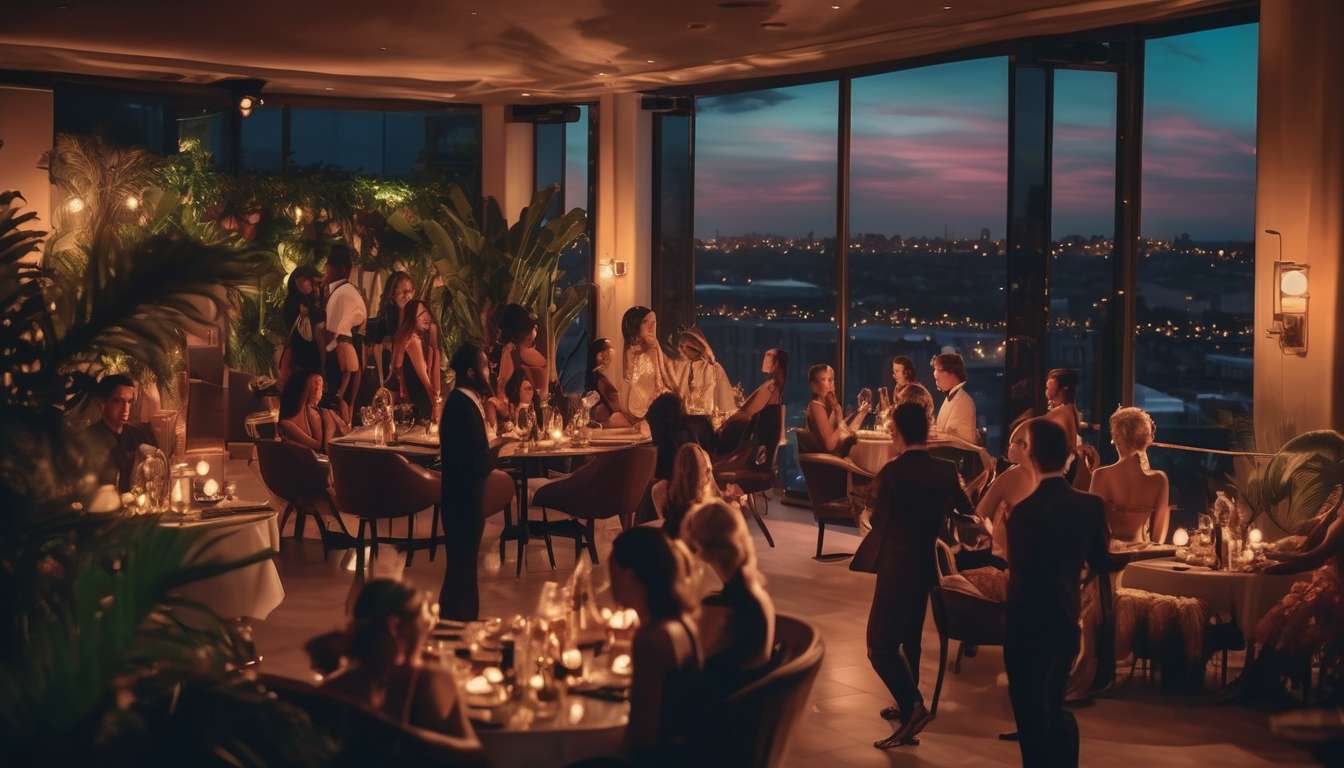
Vastly more hotel nights are now booked alongside adult-entertainment packages than five years ago, a shift that quietly reshapes how we think about both hospitality and nightlife.
We examine how mainstream lodging operators and exotic-dance venues are forging partnerships that expand revenue streams, diversify clientele, and alter the physical and regulatory landscapes of entertainment districts.
We map the practical arrangements—shared marketing, bundled bookings, and venue co-design—that allow hotels and clubs to mutually benefit while managing reputational risk.
We also assess implications for workers, from scheduling stability to changing labor dynamics, and for communities negotiating zoning, safety, and economic development priorities.
Drawing on interviews with managers, performers, and city officials, as well as industry data, we trace the strategic logic behind these alliances and consider what they mean for the future of urban hospitality.
We aim to unpack the balances of commerce, culture, and policy that these emerging models require.
Changing Market Dynamics
We’re seeing shifting customer preferences and regulatory pressures reshape how hospitality partnerships and exotic dancing venues compete and collaborate.
Guests now want inclusive, respectful nightlife that still feels thrilling.
Bundled bookings let guests secure a room, VIP seating, and curated entertainment in one seamless transaction, which builds trust and repeat visits.
Together, we prioritize safety and atmosphere, bundling experiences without diluting identity.
We’re managing tighter zoning compliance and community expectations.
Cooperation with local authorities and neighbors helps maintain permits and operational transparency.
That shared responsibility fosters a sense of belonging among staff, performers, and patrons, and reduces friction that used to drive abrupt closures or relocations.
As operators and allies, we embrace adaptable offerings, measured marketing, and clear guest codes of conduct.
- Define and communicate guest codes of conduct clearly.
- Tailor marketing to emphasize safety, inclusivity, and curated excitement.
- Design adaptable packages that preserve venue identity while meeting guest expectations.
The result: venues can thrive within evolving norms while keeping everyone welcome, safe, and connected.
Hotel-Club Collaboration Models
Practical collaboration models for hotels and clubs
Shared revenue, clear agreements, and defined roles
- Establish written agreements that specify revenue splits, staffing responsibilities, and marketing obligations so every partner understands their role and benefits.
- Include rights-and-responsibilities clauses that address booking control, cancellations, force majeure, and dispute resolution.
Scheduling coordination and brand independence
- Use synchronized calendars to avoid conflicts and optimize peak nights.
- Maintain separate brand voices so each partner preserves identity and loyal patrons while coordinating joint events.
Safety, compliance, and risk reduction
- Build shared protocols for security, age verification, and incident reporting to meet zoning and local regulations.
- Define who is responsible for on-site security, liability insurance, and law-enforcement liaison to reduce risk for both parties.
Inclusive guest experience and consistent training
- Prioritize inclusive guest spaces and consistent training programs to ensure welcoming service across venues.
- Create joint staff-training modules covering customer service, de-escalation, accessibility, and anti-discrimination policies.
Pilot activations and measurable scaling
- Run pop-up activations and shared common areas to test demand before committing to large investments.
- Use transparent performance metrics (attendance, spend per head, incident rates, Net Promoter Score) to decide whether to scale or iterate.
Governance, communication, and ongoing review
- Set regular governance meetings with shared KPIs and a clear escalation path for issues.
- Document operating procedures and review them periodically to stay compliant and responsive to community concerns.
Outcome
- Designing practical, rights-and-responsibilities-focused models helps teams feel connected, protected, and invested in mutual success without sacrificing compliance or community trust.
Bundled Booking Strategies
We’ll package venue access, private rooms, and performer appearances into clear bundle options that make booking simple, transparent, and profitable for both partners.
We design tiered bundled bookings that let hotels and clubs choose consistent packages—basic room access, VIP suites, or full-event buyouts—so everyone knows what’s included, who’s responsible, and how revenue splits.
We center our approach on trust and belonging, framing options that let staff and performers feel secure and valued while guests feel welcomed.
We build standardized contracts that reference hotel-club partnerships and explicitly address zoning compliance, licensing, and insurance obligations, reducing ambiguity and legal risk.
We pilot flexible add-ons—additional performers, extended hours—while keeping base bundles stable to streamline operations and accounting.
We provide clear metrics and a simple reservation portal to make joint scheduling efficient and predictable.
Together we’ll scale offerings that respect neighborhood rules, support performer safety, and strengthen community ties through reliable, well-documented bundled bookings.
Joint Marketing Approaches
We’ll co-create targeted campaigns that combine each venue’s brand strengths, audience data, and safety messaging to drive responsible attendance and steady revenue.
We’ll align visuals and tone so patrons feel welcomed and part of a respectful community, emphasizing inclusivity while highlighting unique experiences.
Our hotel–club partnerships let us cross-promote amenities and streamline bundled bookings, creating clear offers that reduce friction for guests and increase repeat visits.
We’ll use segmented lists and local event calendars to reach existing patrons and curious newcomers, measuring engagement to refine messaging.
We’ll coordinate outreach with concierge teams and nightlife managers so staff speak the same language about boundaries and benefits.
Because regulatory context matters, we’ll make zoning compliance a visible pillar of our communications, reassuring neighbors and officials that we operate responsibly.
We’ll prioritize transparent policies on admission, conduct, and safety in all materials, and we’ll invite feedback so our campaigns evolve with community standards.
Together, we’ll cultivate loyal audiences who appreciate both entertainment and a safe, respectful environment.
Designing Shared Venues
We’ll design shared venues that balance privacy, sightlines, and service flow so both hotel guests and club patrons enjoy distinct, safe experiences without operational conflict.
Key spatial strategies:
-
Clear spatial separation
- Dedicated entrances.
- Staggered elevator access.
- Acoustic buffering to protect guest comfort.
-
Circulation mapping
- Design staff routes that do not cross patron zones.
- Locate service points to stay responsive without creating bottlenecks.
We’ll plan flexible interiors that let the venue scale and shift while keeping a cohesive brand feel.
Flexibility and atmosphere controls:
- Modular furnishings and movable partitions to scale atmospheres for bundled bookings or private events.
- Lighting, signage, and wayfinding to reinforce belonging and gently guide guests between hospitality and nightlife areas.
Compliance and safety will be embedded into the design from the outset.
Regulatory & technical requirements:
- Egress widths sized to code.
- Ventilation appropriate for mixed-use occupancy.
- Age-restricted access solutions and other zoning/safety code compliance.
By integrating operations, aesthetics, and regulation, we create shared venues that feel welcoming, controlled, and adaptable.
Outcome: A place where community and commerce coexist respectfully, maintaining guest comfort, patron energy, and operational efficiency.
Labor and Scheduling Impacts
Assessment of combined operations and staffing impacts
We’ll assess how combined operations affect staffing levels, shift patterns, and cross-trained roles to ensure reliable service for both hotel guests and club patrons.
Designing balanced schedules to value team members
We design schedules that balance peak club hours with quieter hotel service needs to prevent burnout and foster camaraderie.
Cross-training as an essential strategy
In hotel-club partnerships, cross-training becomes essential:
- Front desk staff learn event coordination.
- Servers learn room-service protocols.
- Security teams share procedures to maintain consistent standards.
Predictable shifts and fair on-call policies
We adopt predictable rotating shifts and fair on-call policies so everyone can plan life outside work and feel included in decision-making.
Managing demand spikes from bundled bookings
Bundled bookings create demand spikes we anticipate through:
- flexible staffing pools,
- part-time hires,
- clear overtime guidelines that respect labor laws and staff wellbeing.
Coordination tools and shift trading
We coordinate communication channels and shared shift apps so teams can trade shifts reliably.
Safety, confidence, and community focus
While we respect zoning compliance in site selection, our focus here is building schedules that keep staff safe, confident, and connected to the broader hospitality community.
Regulatory and Zoning Issues
Map local legal requirements early.
We’ll map local licensing, zoning variances, and health-and-safety requirements early to ensure the venue operates legally and minimizes community pushback.
Assemble a shared permit checklist.
We’ll assemble a shared checklist so every partner—from hotel management to club operators—understands permit timelines, conditional-use hearings, and signage rules.
Clarify license ownership and inspection responsibilities.
With hotel-club partnerships, we’ll clarify which entity holds which licenses and who handles inspections, reducing duplication and legal risk.
Prioritize zoning in design decisions.
We’ll prioritize zoning compliance when designing floor plans, entryways, and noise mitigation so neighbors feel considered and regulators see intent.
Document operational rules for events.
For bundled bookings and private events, we’ll document:
- capacity limits
- age-restriction enforcement
- alcohol-service responsibilities
to prevent fines.
Create appeals and variance strategies.
We’ll also create a clear appeals and variance strategy if setbacks or special exceptions are needed.
Coordinate counsel, liaisons, and staff.
By coordinating legal counsel, municipal liaisons, and venue staff, we’ll build a framework that protects operators and welcomes performers and guests.
Maintain a shared, adaptable compliance model.
That shared approach helps us belong to a compliant, resilient model that adapts as local rules evolve.
Community and Economic Effects
We will evaluate how exotic-dancing venues affect local economies, public safety, and neighborhood perceptions to ensure our partnerships create net community benefits.
We believe hotel-club partnerships can drive predictable revenue through bundled bookings and cross-promotion, supporting local suppliers, staff wages, and taxes that fund services we all use.
We also recognize concerns about noise, traffic, and safety; we commit to working with neighbors and authorities to strengthen zoning compliance, sensible hours, and clear codes of conduct that reduce disturbances.
We want our venues to feel like community assets, not outsiders.
- Hire locally to increase employment and local income.
- Offer community events to build positive relationships and provide shared space.
- Share transparent reporting on economic impact to keep stakeholders informed.
By coordinating with city planners and businesses, we can align bundled bookings with off-peak hotel demand, limiting congestion and boosting occupancy without straining infrastructure.
When we prioritize respectful operations, cooperative zoning compliance, and fair economic contributions, we build belonging and mutual benefit.
- Prioritize respectful operations and strict codes of conduct.
- Ensure cooperative zoning compliance and sensible hours.
- Make fair economic contributions through wages, supplier sourcing, and taxes.
Turning potential friction into shared opportunity for residents and businesses alike depends on ongoing collaboration, monitoring, and transparent communication.
How do liability and insurance policies get negotiated and split between hotel and club partners in mixed-use exotic dancing venues?
We’re asking how liability and insurance get divided between hotel and club partners in mixed-use venues.
Negotiate operational responsibilities. Outline which party controls which activities (e.g., food/beverage, security, entertainment, maintenance) so primary operational liability is clear.
Allocate primary coverage to the controlling party. The party that controls an activity should carry the primary insurance for losses arising from that activity.
Use additional insured endorsements and indemnity clauses to backstop gaps.
- Add the non-controlling partner as an additional insured on the controlling partner’s policy where appropriate.
- Draft indemnity provisions that specify scope (claims covered), exceptions (e.g., gross negligence or willful misconduct), and procedures for notice and defense.
Split premiums proportionally and set limits by exposure.
- Apportion premium payments based on which party’s operations drive exposure and the relative square footage or revenue attributable to each use.
- Set policy limits to reflect exposure — higher limits where crowded entertainment or alcohol service increases risk.
Buy excess/umbrella policies where needed.
- Purchase shared or separate excess layers to reach commercially reasonable limits and avoid coverage gaps between partner policies.
Schedule regular reviews and document incident handling.
- Hold periodic insurance and risk-management reviews (annually or after material changes).
- Maintain written incident-response procedures and logs, including notice to insurers, claims handling, and post-incident remediation.
Maintain clear communication to protect everyone involved. Ensure contract language, certificates of insurance, and endorsements are exchanged and updated so both hotel and club partners understand their responsibilities and coverage.
What specific revenue-sharing formulas (e.g., flat fees, percentage of door, per-stage split) are most commonly used and why might one be preferred over another in practice?
We’re asking which revenue-sharing formulas—flat fees, door percentages, per-stage splits—are most common and why one’s chosen.
Flat fees are common when venues want cost certainty. They give the venue a predictable payout regardless of attendance, which reduces financial risk for the venue but places most attendance risk on the promoter. Flat fees work best when the promoter is confident in draw or when the venue’s operating costs are fixed and must be covered.
Percentage-of-door is the most commonly favored model because it creates predictable alignment and scales with traffic. It incentivizes both partners: the promoter benefits from higher attendance and the venue benefits from successful marketing and operations. This model balances risk between partners and is particularly attractive when both parties can influence turnout.
Per-stage splits are useful when there are distinct performance areas with different draw (for example, a main stage and a smaller lounge). They allow revenue allocation that reflects each stage’s audience size and production costs, which is fairer when acts and spaces contribute unequally to total revenue.
Choose the model that matches risk tolerance, cashflow needs, and marketing control by assessing:
- Determine each partner’s acceptable level of revenue volatility and ability to absorb risk.
- Evaluate cashflow requirements and whether predictable income (flat fee) or variable income (percentage) is preferred.
- Decide how much marketing and operational control each party will have, since control often drives incentive alignment.
- Consider the venue layout and event structure to see if per-stage splits would more accurately reflect value contributed.
In short: percentage-of-door is preferred for shared incentives and scalability; flat fees suit venues chasing certainty; per-stage splits fit multi-area events where draws differ. Pick the model that balances risk, cashflow, and perceived fairness so both partners feel valued.
How are performer grievances, disciplinary actions, and contract disputes handled when performers work across both hotel and club-managed spaces?
We’re asking how grievances, discipline, and contract disputes get handled when performers work in both hotel and club-managed spaces.
Layered process:
- Document complaints — record the incident details, parties involved, date/time, and any evidence.
- Attempt informal mediation — facilitate a quick, good-faith discussion between the performer and manager(s) to resolve the issue.
- Escalate when needed — issue written notices and arrange joint reviews by hotel and club representatives if informal steps fail.
Governing contract:
We’ll honor whichever contract governs the incident.
Arbitration:
When neutral arbitration clauses are present, we will use them to resolve disputes impartially.
Priorities:
- Safety — protect performers and staff.
- Clear communication — keep all parties informed of steps and timelines.
- Equitable resolution — ensure outcomes are fair so everyone feels respected and included.
Conclusion
You’re seeing hospitality and exotic-dancing venues increasingly work together to tap new customers, share costs, and diversify revenue.
As hotels, clubs, and promoters bundle bookings, co-market offerings, and design flexible shared spaces, you’ll need to navigate labor schedules, licensing, and zoning changes.
If you plan to enter or partner in this space, you’ll want clear contracts, community engagement, and compliance strategies to manage risks while making the most of expanded economic and cultural opportunities.
Key considerations and steps:
-
Operational coordination.
- Align labor schedules and staffing models across participating venues.
- Design flexible spaces and booking systems that accommodate multiple uses.
-
Regulatory compliance.
- Review local licensing requirements for adult entertainment and hospitality.
- Assess zoning regulations and seek variances or community approvals as needed.
-
Risk management and contracts.
- Draft clear partnership agreements covering revenue splits, liability, and termination.
- Include policies for safety, harassment prevention, and worker protections.
-
Marketing and revenue diversification.
- Co-market packages that blend accommodation, nightlife, and performances.
- Explore cross-promotions and bundled ticketing to broaden customer reach.
-
Community and stakeholder engagement.
- Proactively communicate with neighbors, local businesses, and officials.
- Address community concerns through transparent plans for noise, safety, and hours.
Bottom line: Entering or partnering in blended hospitality–exotic-entertainment ventures can unlock new economic and cultural benefits, but success depends on rigorous operational planning, legal compliance, clear contracts, and thoughtful community engagement.